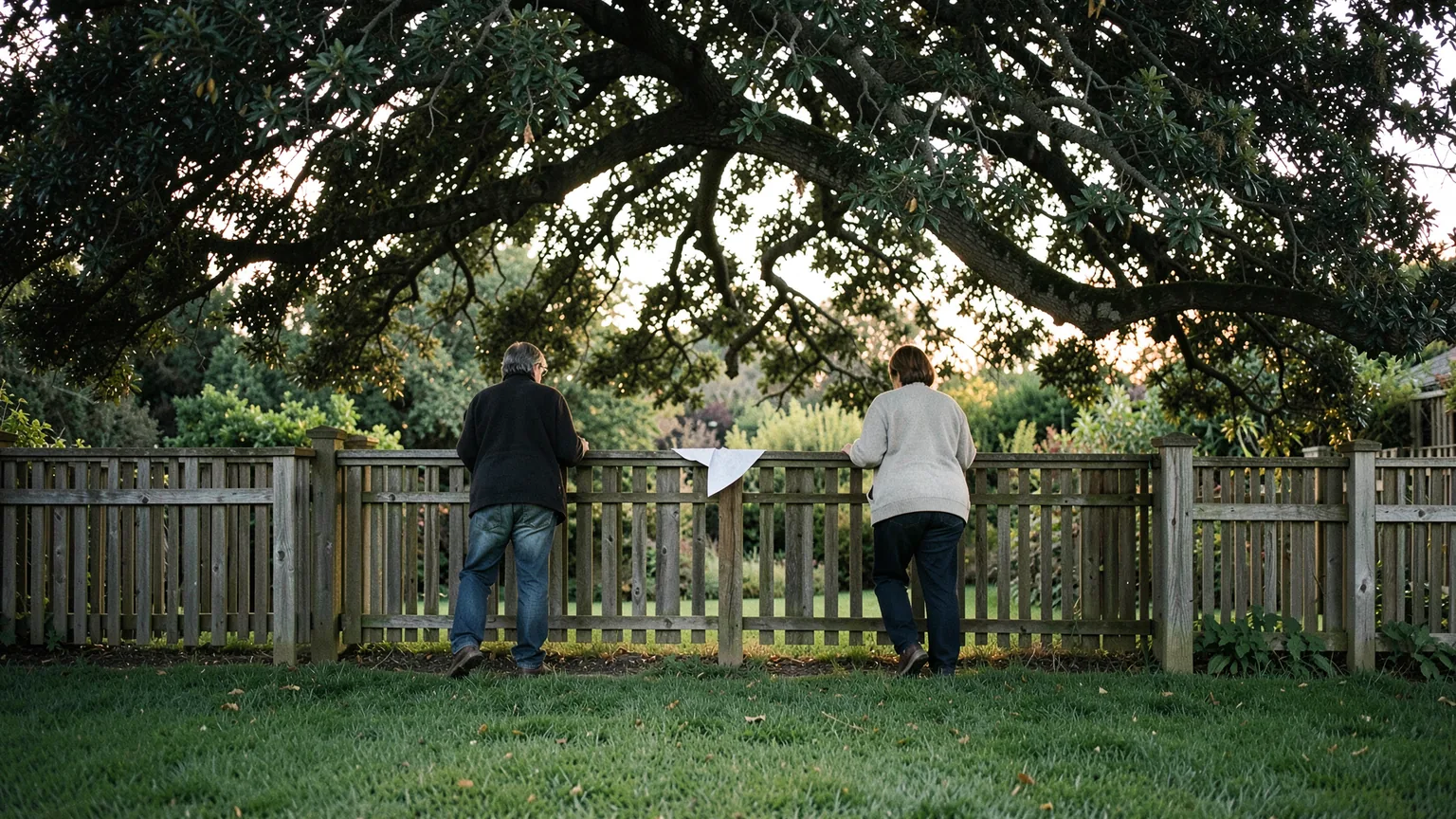
Talking to neighbours about tree work in Exeter
Trees on a boundary generate more disputes than almost any other garden issue, and the disagreement usually starts with a conversation that was never had. A neighbour notices a large branch hanging over the fence, the owner plans a crown reduction without warning, and within weeks the question is who pays, who owns the tree and whether the work was lawful. A conversation before any saw is picked up, backed by clear records, prevents most of these arguments and makes it much easier to agree the work in writing.
Starting the conversation early
The strongest time to talk to a neighbour is before the crew is booked, not after the first branch has landed on their side of the fence. Explain what is planned, why it is needed and roughly when it would happen. Ask whether the neighbour has any concerns, whether they have noticed any defects in the tree and whether they would like to be involved in the choice of contractor. In Exeter, where many gardens back onto one another, a calm conversation at the fence is often enough to agree the principle of the work, leaving only the detail to be settled.
Some owners prefer to put the first approach in writing, particularly where the relationship is strained. A short letter or message setting out the proposed work, the dates and a contact number gives the neighbour time to think and avoids the impression that the work is being sprung on them. The tone should be factual. Describing the work as necessary for safety or for the health of the tree tends to be more persuasive than arguing about the amenity value of the tree, which can become a matter of opinion.
Photographs help. A dated photograph of the tree from the garden, showing the branch or lean in question, creates a record that both sides can see. The same applies to any damage that has already occurred, such as a fence panel that has been broken or a gutter that has been dislodged. Photographs taken at the time are much more useful than recollections given weeks later.
Access over neighbouring land
Tree work often requires access across the neighbour's land. A crew may need to stand in the neighbour's garden, lower material over a fence, or bring equipment through a side passage. The owner who wants that access needs the neighbour's permission, and it should be given in writing, specifying the dates, the route, the equipment and any conditions such as protection for lawns or paths.
Access should also be agreed for the clearing up. Brash and logs that land on the neighbour's side must be removed, and the owner should confirm that the crew will do this before the work begins. A neighbour who has been asked to allow access and then finds debris in the flower bed is likely to refuse access next time, which makes future work much harder. The guide on preparing for a tree crew lists the practical steps that keep the day on schedule and the neighbour onside.
Where the neighbour refuses access, the owner should not assume that the work can proceed in any other way. Entering the neighbour's land or working from it without permission can amount to trespass, and the owner should seek advice before going ahead. The neighbour, for their part, may cut back branches that overhang their land, but only up to the boundary, and the Citizens Advice guidance notes that the cut branches legally belong to the tree's owner, so the neighbour should ask before throwing them away.
When the tree is protected
If the tree is protected by a tree preservation order or stands in a conservation area, the boundary rule gives way to the planning controls: neither the owner nor the neighbour may prune it, even on the neighbour's side of the fence, without the council's consent or the required notice. The Planning Portal's guidance on trees explains that work to protected trees usually requires the council's consent, and that anyone who wants to prune branches overhanging from a neighbour's protected tree needs to contact the local planning authority. That rule catches many owners who assume a branch over their fence can simply be cut.
The council's consent is a separate matter from the neighbour's agreement. A neighbour may agree to the work, but the work still needs consent, and the council may refuse or attach conditions. The owner should check the position before approaching the neighbour with a firm proposal, so that the conversation is based on what is lawful rather than what is hoped for. The guidance on tree preservation orders sets out the consent framework, and the guide on checking tree protection explains how to check the status of a tree before any conversation starts.
Written agreement and records
A written agreement is the most useful outcome of a neighbour conversation. It should record the tree or trees involved, the work to be carried out, the contractor, the date, the access arrangements, the division of cost and the disposal of material. It should be signed by both owners and kept with the property papers. If the property is later sold, the agreement can help the new owner understand what was done.
Keep a log of every communication, including dates, the form of contact and a short summary of what was said. A record kept at the time is more reliable than a memory that has faded. Photographs of the work before and after, taken from both sides of the boundary, complete the file. If a dispute later reaches a solicitor or a court, that file is the owner's strongest evidence.
Where a neighbour's tree is causing a problem in a way that the owners cannot resolve, the question may move beyond the tree work itself. The guide on high hedge complaints explains the complaint route for hedges that block light, and the guide on unsafe tree signs helps an owner decide whether a neighbour's tree is a safety concern rather than a nuisance.
Keeping the relationship intact
Most boundary disputes end with the trees still standing and the neighbours still speaking, provided the work was agreed and the mess was cleared. The owner who plans the work, shares the quote, asks for access and cleans up afterwards tends to avoid the long dispute that follows a surprise. The residential tree service describes the arrangements typically used for work in domestic gardens, and a quote request that sets out the boundary position and the agreed split of costs gives the contractor what it needs to plan the work with the neighbour in mind.
Exeter gardens often sit close together, so a single tree can affect several properties. Where that is the case, a conversation with every affected neighbour, rather than just the adjoining one, is the surest way to avoid complaints. The trees may look like a private matter, but a branch that falls on a shared path or a drive affects everyone who uses it.
Sources and further reading
- If you disagree with your neighbour about a tree or hedge (Citizens Advice)
- Planning Portal: trees (Planning Portal)
- Tree Preservation Orders and trees in conservation areas (GOV.UK)